1 Oct 2026
Mapping Legislative Shifts That Reshaped Live Dealer Availability in Multiple States
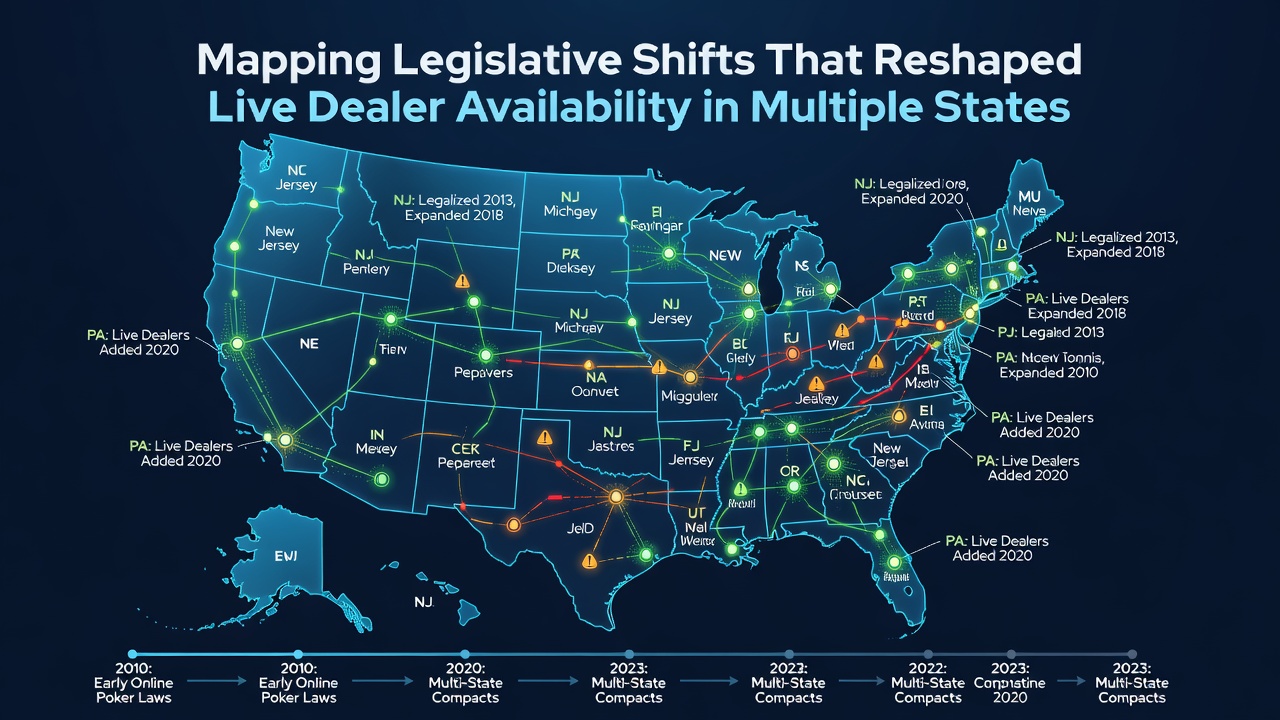
Legislative activity in several states has steadily expanded or restricted live dealer options through targeted amendments to gaming statutes, and these adjustments have produced measurable differences in market access by October 2026. Early authorizations in New Jersey and Delaware established regulatory templates that later states adapted, while newer entrants such as Pennsylvania and Michigan refined licensing procedures and tax structures to accommodate real-time dealer streams. Data from state gaming commissions show that the number of approved live dealer platforms increased from fewer than ten in 2018 to more than sixty across five states by late 2026, reflecting incremental statutory revisions rather than wholesale overhauls.
Initial Authorizations and Their Ripple Effects
New Jersey's 2013 online gaming law created the first framework that explicitly permitted live dealer tables linked to Atlantic City casinos, and subsequent regulatory bulletins clarified software standards and geofencing requirements. Delaware followed with compact-based legislation that limited live dealer access to state-run platforms, a distinction that produced lower table counts but tighter oversight. Observers note that these foundational statutes influenced neighboring jurisdictions, where lawmakers borrowed language on player verification and server location while adjusting revenue allocation formulas to fit local budgets.
West Virginia entered the space in 2019 through amendments to its existing racetrack casino statutes, and the resulting rules allowed live dealer integration at licensed facilities with mandatory physical tie-ins. Michigan's 2019 legalization package added explicit provisions for internet gaming that included live dealer formats, and the state's gaming control board issued technical standards that aligned with those already operating in New Jersey. Figures released by the Michigan Gaming Control Board indicate that live dealer handle grew from zero to several hundred million dollars within the first three full years of operation.
Expansion Patterns Through 2025 and Into 2026
Additional states passed or amended online gaming measures between 2023 and 2025, each incorporating lessons from earlier adopters regarding server placement and responsible gaming tools. Pennsylvania updated its tax schedule in 2024 to include a separate category for live dealer revenue, a change that coincided with an increase in approved game types. By October 2026, regulatory filings showed that live dealer availability had extended into new counties in West Virginia after legislators removed certain geographic restrictions that had previously limited operator participation.
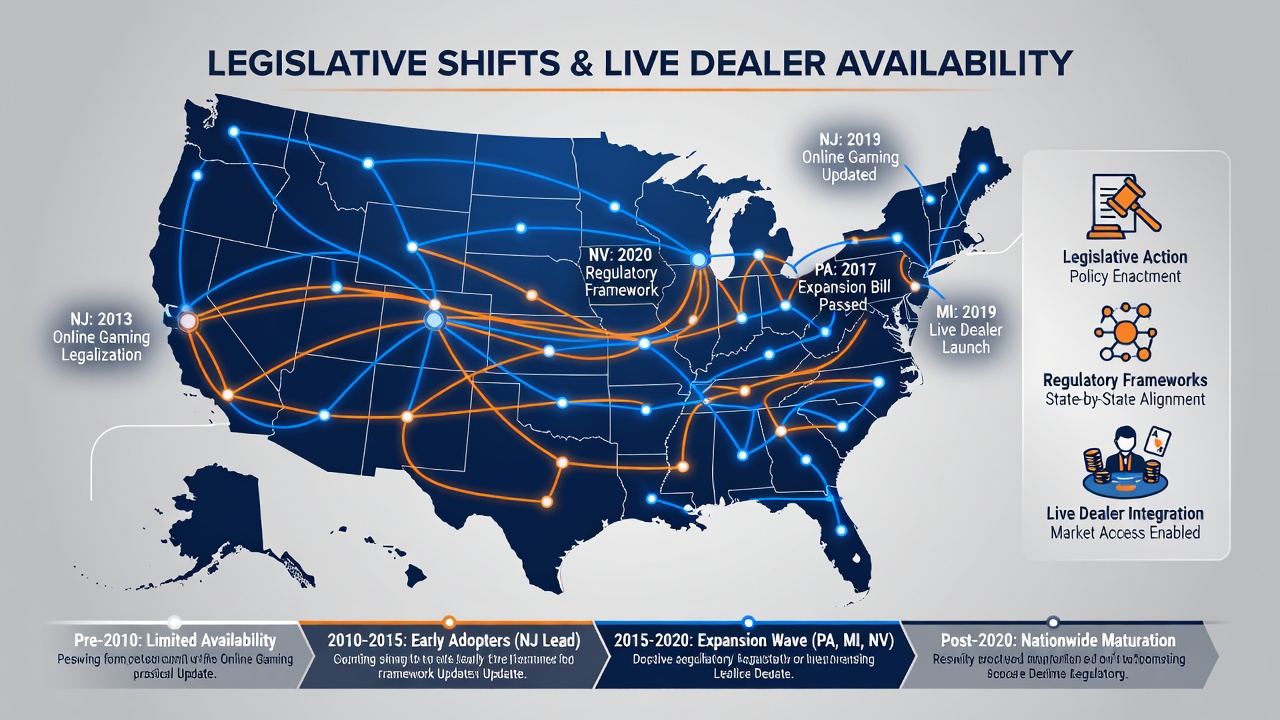
Connecticut's 2021 sports wagering law contained provisions that later enabled live dealer poker and table games through tribal compacts, and regulators there required operators to maintain duplicate servers within state borders. Research compiled by the American Gaming Association reveals that states adopting similar server mandates experienced slower rollout timelines but reported fewer compliance incidents once platforms launched. Meanwhile, ongoing legislative proposals in states such as New York and Ohio continued to reference these models when drafting language for potential live dealer inclusion.
Cross-State Comparisons and Data Trends
Regulatory filings across jurisdictions demonstrate consistent patterns in how live dealer availability correlates with specific statutory language on geolocation, payment processing, and age verification. States that embedded these requirements in primary legislation rather than agency rules tended to experience fewer court challenges, according to records maintained by the National Council of Legislatures. Turnout at legislative hearings in multiple states also showed increased participation from technology vendors seeking clarity on streaming standards and latency thresholds.
One study released by the University of Nevada, Las Vegas International Gaming Institute tracked the number of active live dealer tables per licensed operator and found that states with lower tax rates on internet gaming hosted more tables per capita than higher-tax environments. These findings align with licensing data published by the Alcohol and Gaming Commission of Ontario, which examined similar dynamics in Canadian provinces that permit live dealer formats. The comparison highlights how legislative design choices affect both the quantity and variety of games that become accessible to residents.
Conclusion
Legislative shifts across multiple states have produced a patchwork of live dealer availability that continues to evolve as statutes are refined and new regulatory guidance is issued. By October 2026, the cumulative effect of these changes had expanded options in established markets while introducing measured entry points in newer jurisdictions, all shaped by the specific wording of each state's enabling laws and subsequent amendments. Tracking these developments requires attention to primary legislative texts and the administrative rules that follow, because small differences in statutory language have repeatedly determined which platforms reach players and under what conditions.