17 Sep 2026
Behind the Curtain: Sourcing and Verifying Live Gaming Data Across State Lines
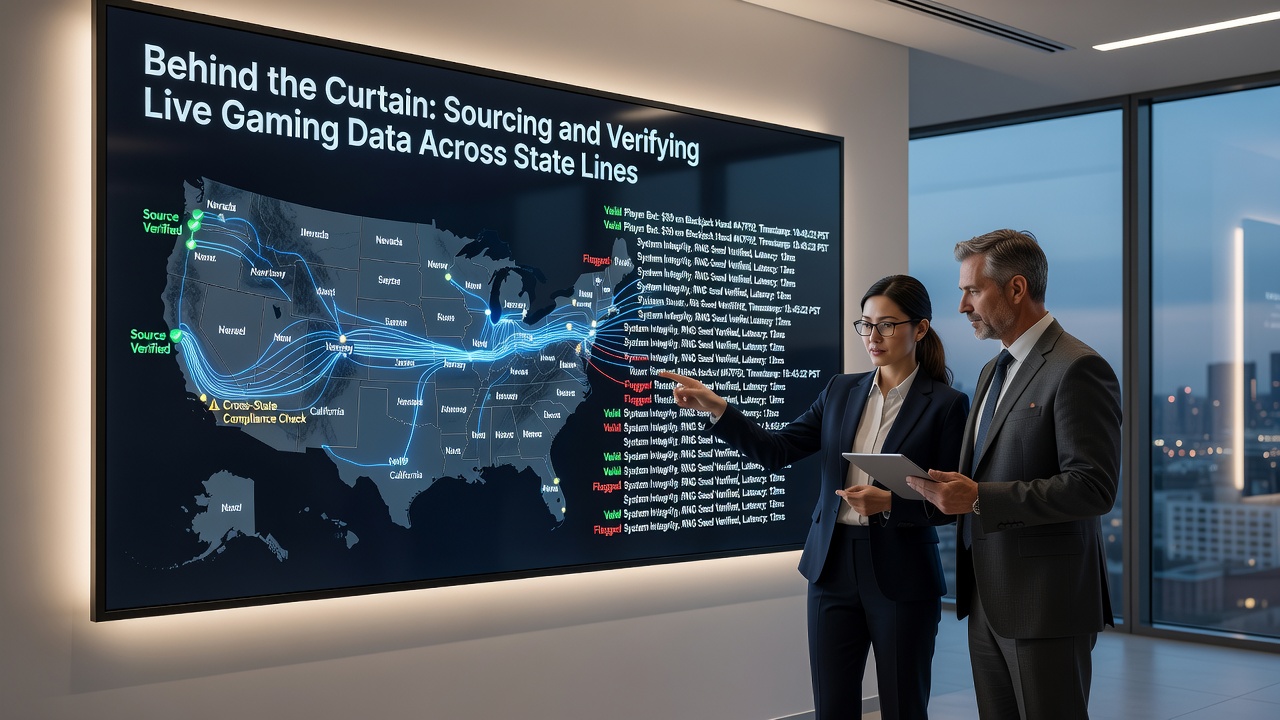
Live gaming data moves through secure pipelines that connect dealer tables in one state to player interfaces in others, and operators rely on specialized providers who maintain studios equipped with multiple camera angles along with optical character recognition systems that capture card values and wheel outcomes in real time. These feeds travel over encrypted connections that must satisfy the technical standards set by each jurisdiction where the data lands, which creates a patchwork of requirements that companies address through modular compliance architectures rather than uniform national protocols.
Data Acquisition from Licensed Studios
Studios located in states such as New Jersey and Pennsylvania generate the majority of live dealer streams used by operators serving players nationwide, while additional facilities in Michigan and West Virginia have expanded capacity since 2023 to reduce latency for eastern time zone users. Providers install redundant recording systems that log every frame alongside metadata on game type, table identifier, and timestamp, and these logs feed directly into centralized databases that state regulators can audit on demand. The American Gaming Association has documented how interstate data routing increased by 28 percent between 2024 and 2025, reflecting both higher player volumes and the addition of new live game variants such as speed baccarat and multi-hand blackjack.
Verification Protocols and Audit Trails
Verification begins at the studio level where independent testing labs certify that optical recognition software matches human review accuracy above 99.8 percent, and daily checksum reports confirm that stored game results remain unaltered after transmission. Operators then apply secondary validation layers that cross-reference live feeds against backup video archives before results reach player devices, and any discrepancy triggers an automated hold that notifies compliance teams within seconds. Researchers at the University of Nevada, Reno have examined similar verification frameworks and reported that multi-state operators conduct an average of 14 separate integrity checks per game round when data crosses regulatory boundaries.
State gaming commissions require that all verification software receive pre-approval, which means updates to recognition algorithms must undergo re-testing in each jurisdiction even when the core technology remains unchanged. This process typically takes between 45 and 90 days depending on the volume of code changes submitted, and companies schedule staggered rollouts to avoid simultaneous downtime across multiple markets.

Regulatory Differences That Shape Data Handling
Each state maintains its own data retention schedules and encryption standards, so operators store New Jersey-sourced streams for five years while Michigan records remain accessible for seven years under current rules. Pennsylvania requires real-time monitoring dashboards that display aggregate statistics without exposing individual player activity, whereas West Virginia permits aggregated export for marketing analysis after a 48-hour anonymization window. These variations force providers to segment their databases by originating jurisdiction rather than consolidate everything into a single repository, and the added complexity increases both storage costs and the time required to generate regulatory reports.
September 2026 Developments in Interstate Data Sharing
Beginning in September 2026, several states plan to pilot a shared audit interface that allows participating commissions to query verification logs without requesting full file transfers, and early documentation indicates the system will use permissioned blockchain entries to record each access event. The pilot includes New Jersey, Pennsylvania, and Michigan, with additional states expected to join after the initial 90-day test period concludes. Industry observers note that this approach could reduce the administrative burden of cross-border audits while preserving each state's authority to set its own data access policies.
Technological Tools Supporting Cross-Border Compliance
Application programming interfaces developed by specialized gaming technology firms allow operators to route specific data fields to the correct state servers automatically, and these systems embed jurisdiction tags that trigger the appropriate retention and encryption rules without manual intervention. Encryption protocols such as AES-256 remain standard, yet some states now request additional tokenization of sensitive identifiers before data leaves the studio network. Testing labs continue to evaluate quantum-resistant algorithms in anticipation of future mandates, and several providers have already begun internal trials that compare current and next-generation encryption performance on live feeds.
Conclusion
The infrastructure supporting live gaming data across state lines rests on a combination of licensed studio operations, layered verification steps, and jurisdiction-specific compliance modules that together maintain integrity while accommodating regulatory diversity. As states continue to refine their technical requirements and explore collaborative audit tools, operators and technology providers adjust their systems to meet both current obligations and emerging standards scheduled for implementation in 2026 and beyond.